
Natural Materials Library
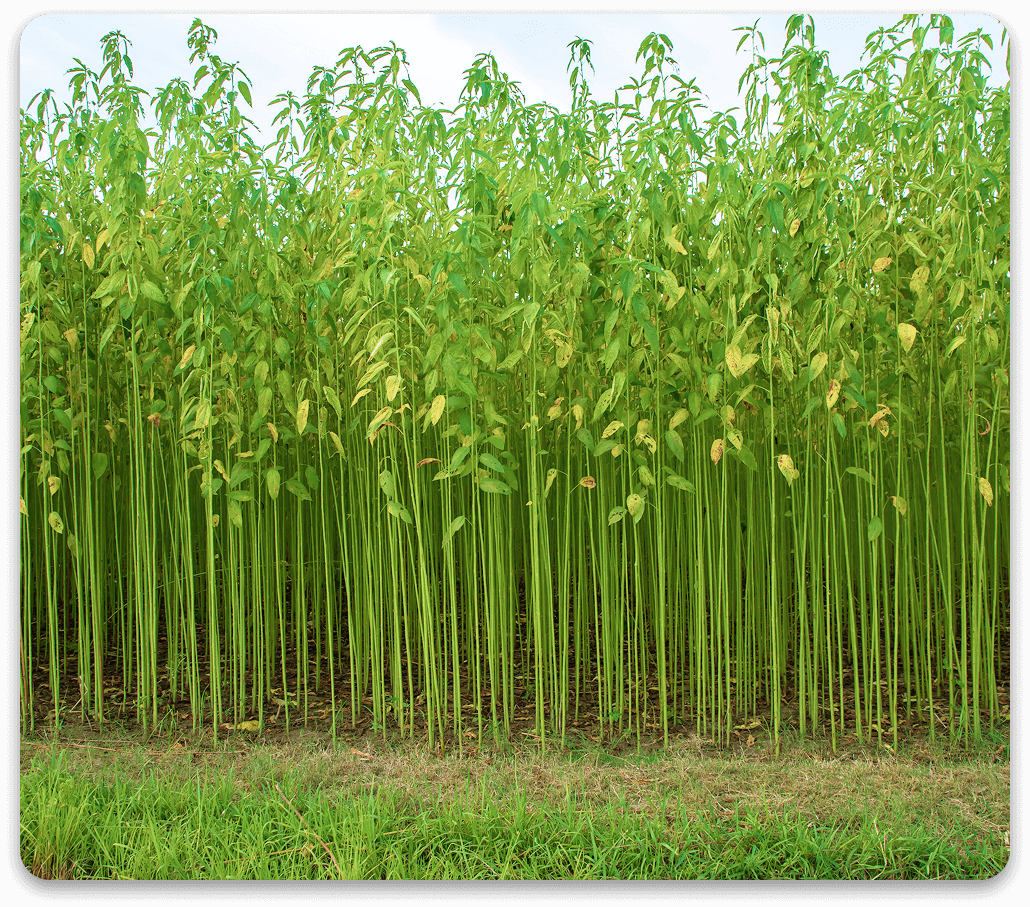
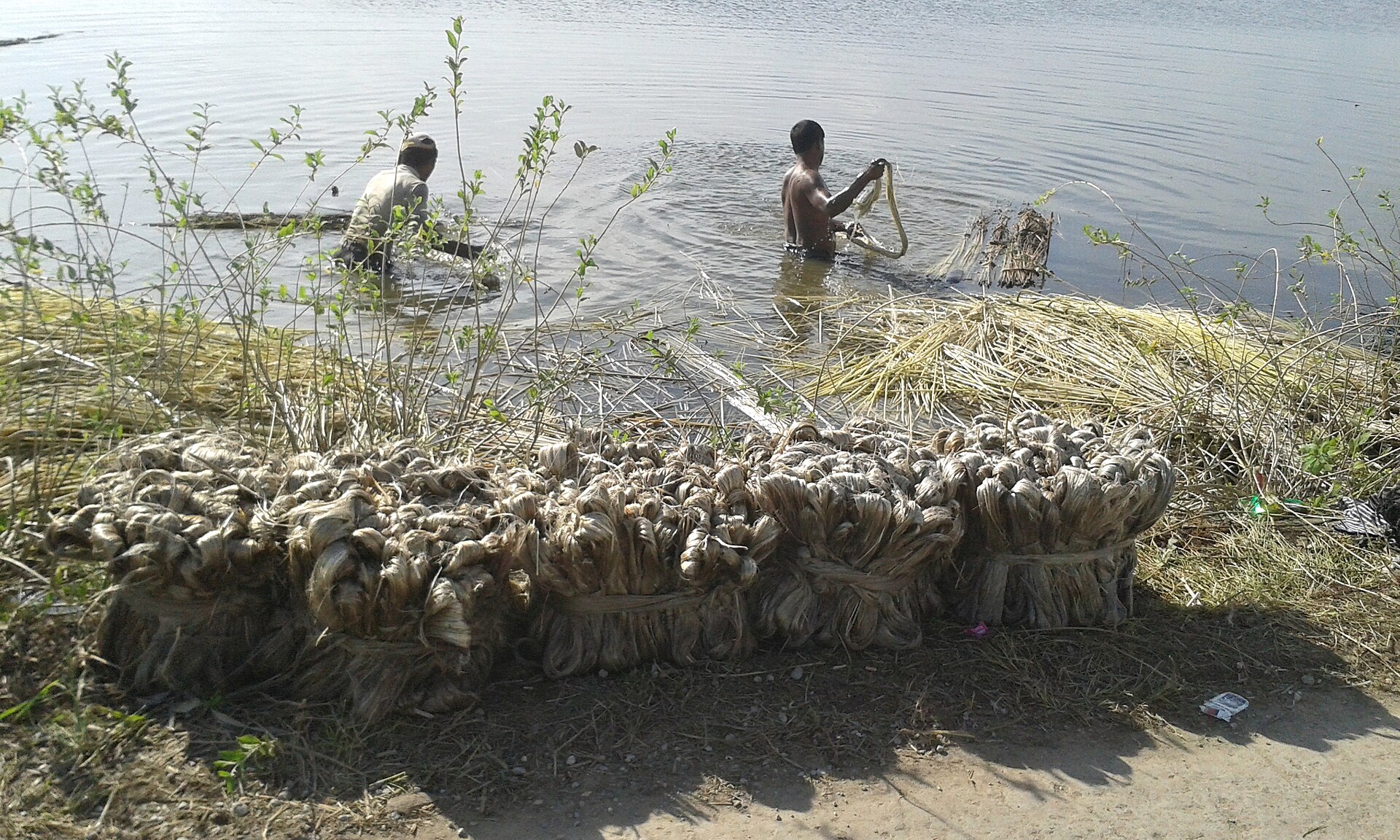
Photo: Masum-al-hasan / Wikimedia Commons. Licensed under CC BY-SA 3.0. This web-size rendition (1920 × 1152 px) is resized from the 2560 × 1536 px original; the resized image remains under the same license.

What Is Jute?
Jute is a bast fiber taken from the outer stem tissues of plants grown as fiber crops in warm, humid regions. Two principal commercial sources are white jute (Corchorus capsularis) and tossa jute (Corchorus olitorius).
Natural Characteristics
Undyed jute often has a straw-to-golden-brown color. It can produce a coarse, tactile yarn, with the feel and flexibility changing according to the grade, twist, and weave. Moisture exposure and surface wear are worth checking against a sample. The fiber alone does not establish the durability, cleanability, or other performance of a finished product.
Processing and Weaving
In typical industry practice, harvested stems are retted to loosen the fiber bundles. The fibers are then separated, washed, and dried. Depending on the end use, they may be graded, spun into yarn, and woven or braided. This describes standard preparation. Kim Phat confirms the material and construction for each order.
Applications in Natural-Fiber Products
Jute is used in coarse woven fabrics, twine, carpet yarns, rugs, mats, and decorative woven surfaces. For wall coverings, the weave sets much of the visible texture. Dyes, adhesives, coatings, or backing materials can affect the composition and performance of a finished product.
Jute Rope, Cord and Braided Constructions
Jute rope is a constructed form of jute, rather than a separate botanical material. For a design brief, distinguish a twisted cord from a braided strand and state how it will be used in the finished piece. A photograph or the word “rope” alone does not define a repeatable construction.
Ask for the nominal diameter and tolerance, number of plies or strands, twist or braid construction, color, finish, joins and composition. Confirm whether the strand contains another fiber or a core. Approve a physical reference for surface hairiness, flexibility and consistency before agreeing a repeat order.
For a coiled, stitched or woven decorative design, check the proposed edge finish and how the cord is secured. For a bonded wall surface, trial the complete face, adhesive and backing for show-through, flatness, seams and dimensional change. Assess cleaning and moisture exposure for the intended application; decorative rope is not a certified load-bearing rope.
Kim Phat reviews the cord construction for each proposed product. The use of jute in current manufacturing does not establish that every rope specification is available. Include a cord sample or close-up reference and the intended product when requesting a development review.
Practical Considerations for Buyers
Compare samples at the intended yarn thickness and weave density. Ask which layers are jute and which are backing, adhesive, or finish. For wallcovering projects, review dimensional tolerances and finishing compatibility on the complete construction. For rugs, agree the intended use and cleaning method against the finished sample.
Sourcing Considerations
Ask where the jute was grown and how the fiber was retted and dyed if these are part of your sourcing specification. Check any environmental or certification claim against documentation for the actual fiber and finish.
How Kim Phat Uses Jute
Kim Phat manufactures woven jute wallcovering substrates and uses jute in selected rugs and decorative mirror frames. For an OEM project, share your target texture, weave reference, dimensions, and finishing requirements. We can assess the construction and discuss a sample.
Explore Products and B2B Enquiries
Browse Kim Phat’s jute product archive, explore Rugs & Mats, or see our woven wallcovering materials. For decorative frames, explore Mirrors.
Send your material, intended use, target dimensions, and approximate quantities so we can discuss samples and custom manufacturing.