
What Is Water Hyacinth?
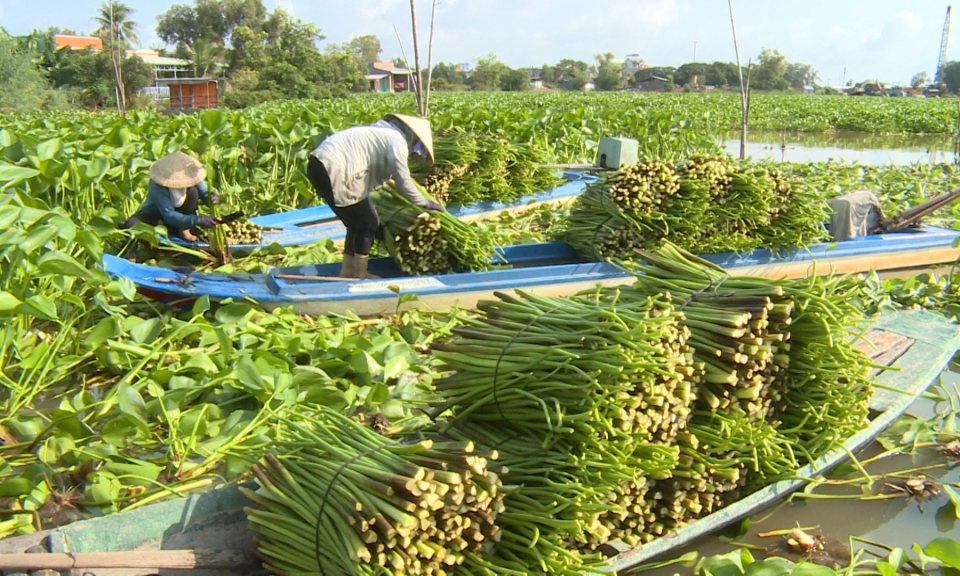
Common water hyacinth (Pontederia crassipes, also known as Eichhornia crassipes) is a floating freshwater plant. Woven goods typically use the dried leaf stalks. Suppliers may describe the prepared stalks as fiber even when they are used whole, flattened or split.
Characteristics and Preparation
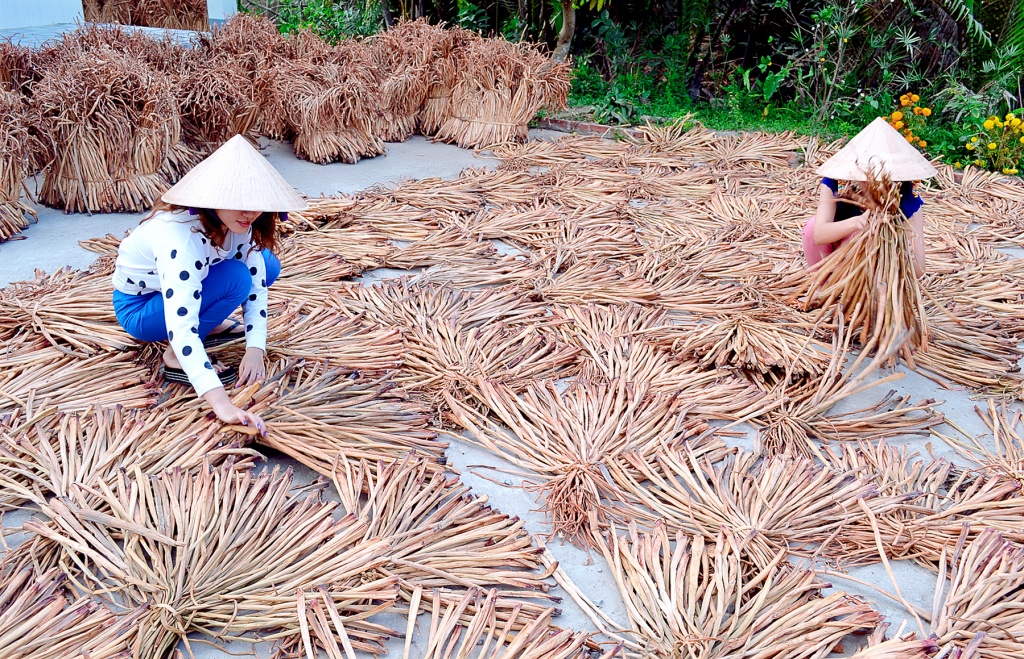
Dried stalks often range from pale straw to brown. Whole stalks give a raised surface. Flattened or split stalks give a shallower profile and can show differences in width, tone and crease marks. The stalks are sorted and dried before they are braided, interlaced or used as weft. Preparation and weave density shape the finished texture.
Applications and Buyer Considerations
Water hyacinth is used in baskets, mats and rugs. For a decorative wallcovering face, evaluate a flattened weave on the intended backing. Check adhesion, seam appearance, color variation and cleanability. Plan for dry interior use unless tests on the complete assembly support another application.
Sourcing and Natural Variation
Common water hyacinth is invasive in many waterways. Ask where the plant was collected, how transport prevents spreading viable plants, and how the stalks were dried and treated. A craft use alone does not establish an environmental benefit.
Water Hyacinth at Kim Phat
The water hyacinth product archive includes rug references in different shapes and weaves. Some designs combine water hyacinth with another material. Confirm composition by product code. For wallcovering development, share the target texture, backing, roll width, quantities and market requirements.
Explore Products and B2B Enquiries
Wall Coverings · Seagrass Fiber · Discuss a material brief · Back to Materials Library